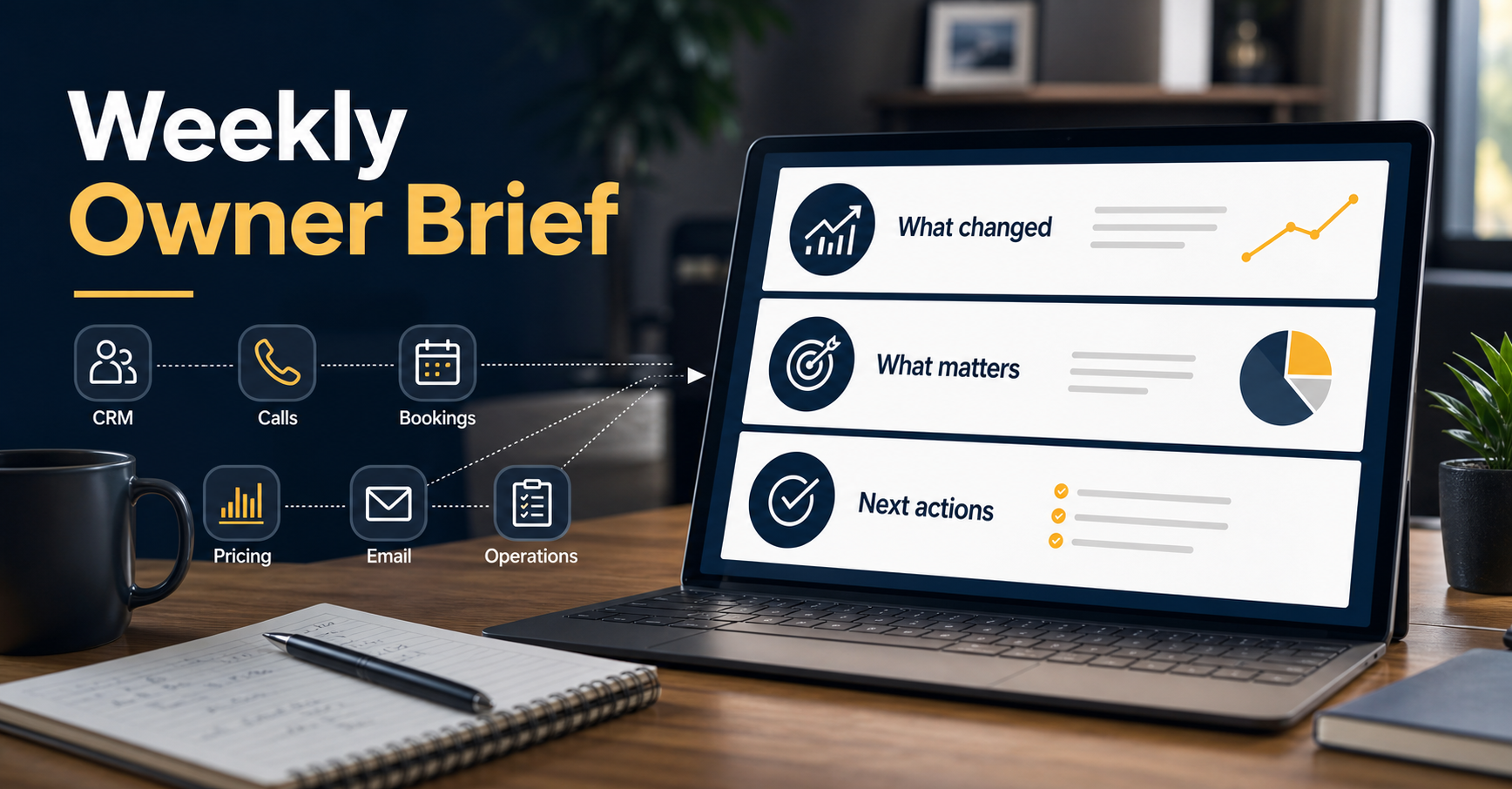
Small-business owners are rarely short on reports. Sales numbers, job statuses, customer activity, cash, advertising, and team updates are all available somewhere. The hard part is turning those pieces into a clear view of the business without giving up an evening to find it.
A report is not the same as an answer
A report tells you what is in a system. An answer helps you decide what to do. Owners need to know what changed, what deserves attention, and what can wait. A wall of numbers may be accurate and still fail to answer any of those questions.
That is why adding more charts often does not create more clarity. It can create one more place to look and one more task that depends on the owner finding time to interpret it.
Think in terms of an owner brief
A useful weekly update can be short. It might show that new leads increased, three large opportunities have gone quiet, two jobs are waiting on a decision, and receivables moved in the wrong direction. Each item should explain why it matters and, when possible, suggest a reasonable next step.
The owner can scan the brief, ask better questions, and spend time on the exceptions. If more detail is needed, the original record should be one click away.
Use the numbers your business actually runs on
The right update is different for every company. A service business may care about unreturned estimates and jobs waiting to be scheduled. A retailer may care about slow-moving stock and unusual refunds. A contractor may need to see projects that are slipping or change orders that have not been approved.
Start with the questions the owner already asks every Friday. Those questions reveal which numbers matter and which details are just noise.
Make attention the scarce resource
Owners do not need to watch everything all the time. They need confidence that important changes will be brought to them. A good update makes normal activity quiet and makes exceptions easy to see.
That changes the owner’s job from hunting for problems to making decisions. It also reduces the constant check-ins that pull employees away from their work.