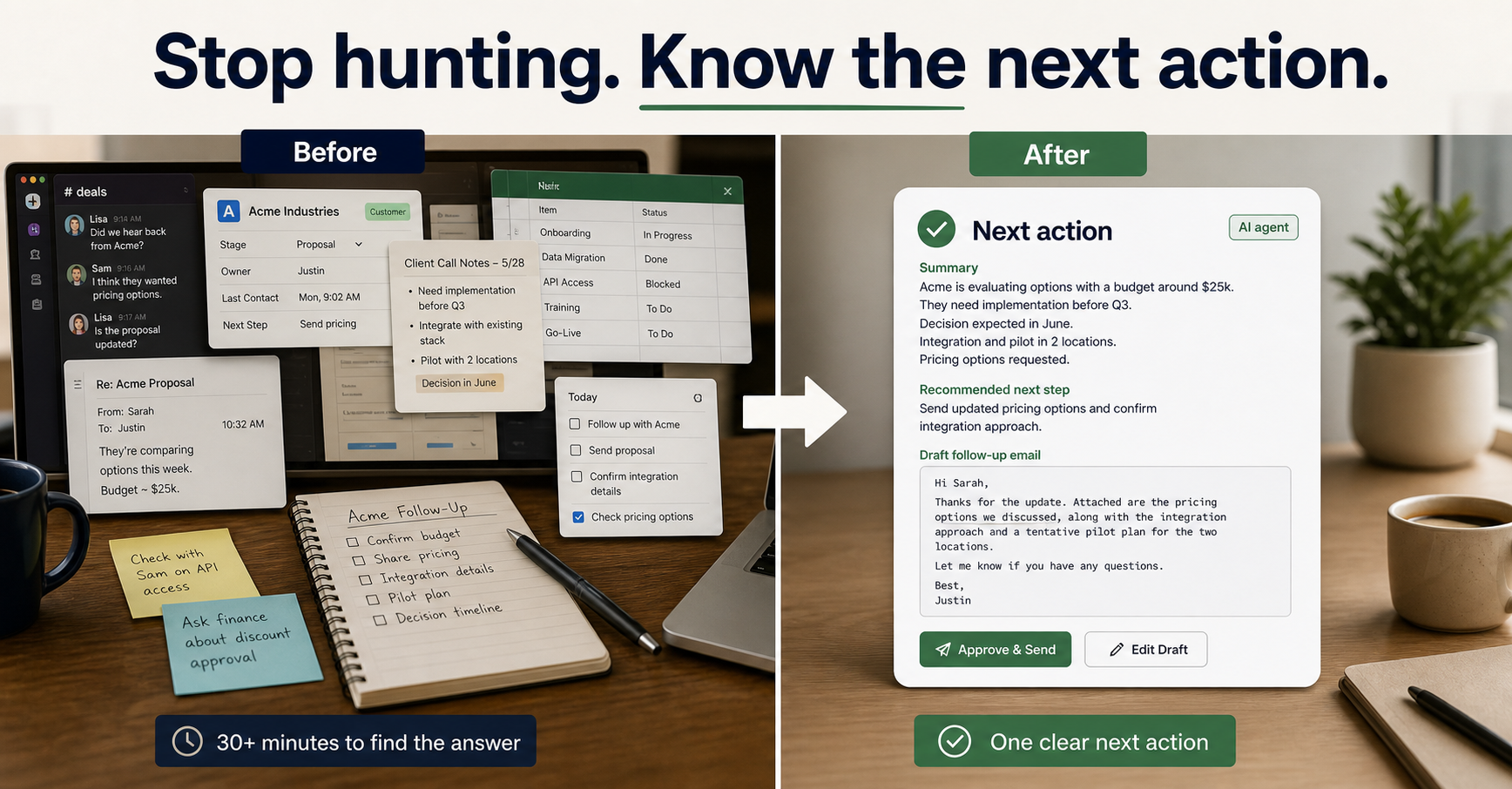
A customer asks for an update. The answer is somewhere in the business, but first someone has to check the inbox, open the customer system, search a spreadsheet, read a message thread, and ask the one person who remembers what happened. Thirty minutes later, the answer is finally clear. Nothing was technically broken, but the business still lost half an hour.
The cost is bigger than the search
Information hunting interrupts whatever someone was doing before. It slows the customer response, creates another handoff, and makes experienced employees the only bridge between disconnected tools. Repeat that across a week and a small inconvenience becomes a real operating cost.
It also creates uncertainty. When different systems show different pieces of the story, people spend time deciding which one to trust. Sometimes they make the call with incomplete information. Sometimes the work waits.
Start with one question people ask repeatedly
Do not begin by trying to clean up every system in the company. Pick a useful question that takes too long to answer: Which leads need a response? What jobs are waiting on a customer? Which invoices are overdue? What changed since yesterday?
Then identify the few places needed to answer that question. A small connection between those sources can produce one clear summary, with links back to the original details when someone needs them.
Bring the answer to the team
People should not have to remember to check another screen. A short morning email, a message in the tool the team already uses, or a simple list inside the normal workflow is often more useful than a brand-new portal.
The best result is easy to recognize: the employee sees what matters, understands why it needs attention, and knows the next step. The source systems can stay where they are. The daily scavenger hunt does not have to.
Keep a person in the loop
Bringing information together does not mean letting a system make every decision. A person should still review customer messages, confirm unusual situations, and handle the calls where context matters.
The system does the gathering. Your team does the thinking. That division of labor is both safer and more useful for a small business.