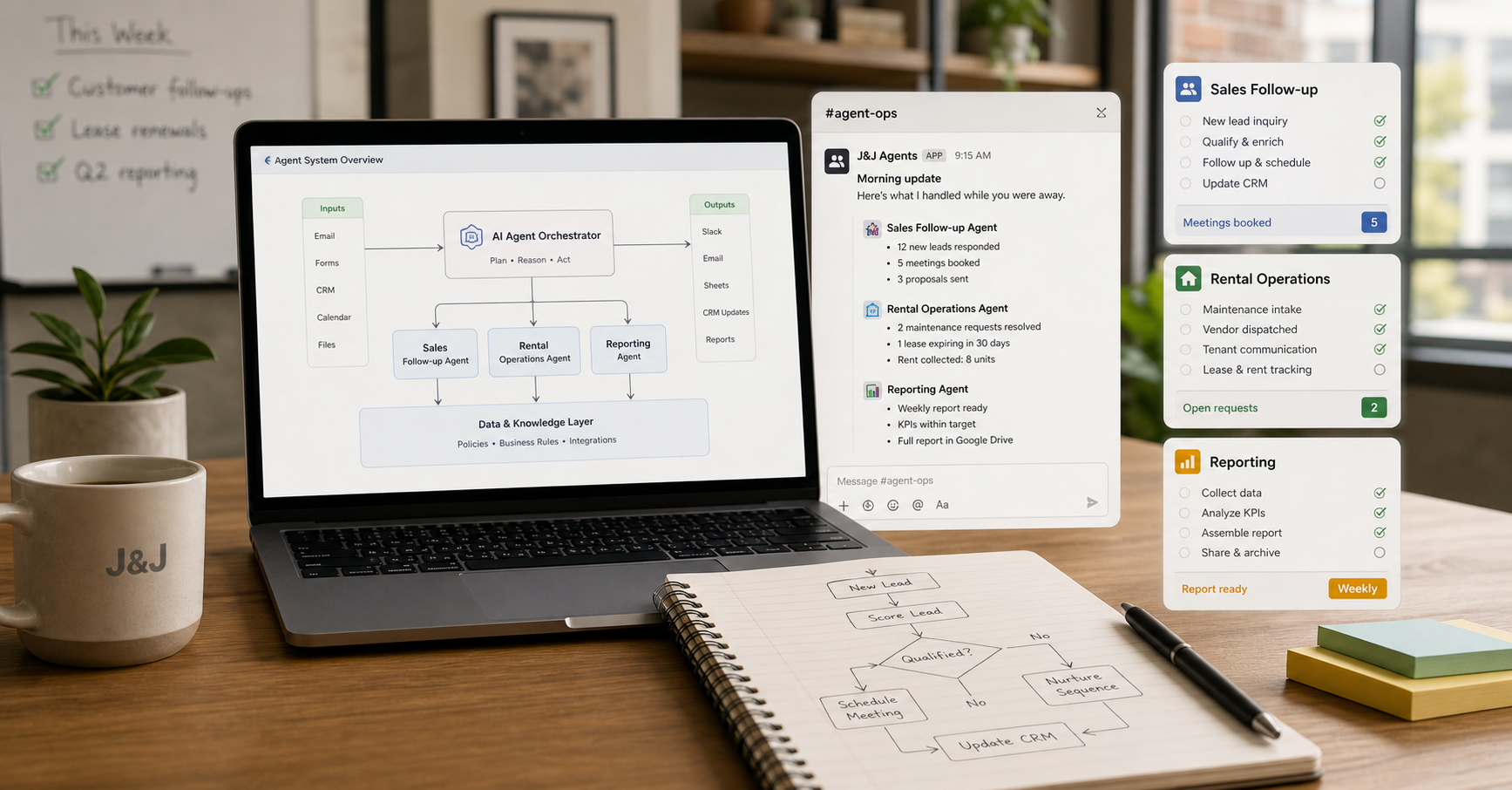
Small businesses do not usually have people sitting around with nothing to do. They have good employees carrying too many small tasks, keeping too much in their heads, and doing their best to make sure nothing gets missed. That is why the best use of new technology is not to replace the team. It is to give that team more room to do its best work.
Start with the work people dread
Ask your employees which part of the week they would gladly never do again. You will probably hear about copying information between systems, searching for the latest update, writing the same follow-up message, or building a report that is out of date almost as soon as it is finished.
Those tasks matter, but they do not need the full attention and experience of a good employee. When routine work is prepared automatically, a person can review it, make the judgment call, and move on. The employee stays in control. The busywork gets smaller.
Protect the knowledge you already have
Your team knows the customer who prefers a phone call, the job that needs a careful handoff, and the exception that will never fit neatly into a rule. That practical knowledge is one of the most valuable things in a small business.
A useful system should make that knowledge easier to apply. It can put the right background in front of an employee, flag something that needs attention, or prepare a sensible next step. It should not pretend that years of experience can be reduced to a button.
Measure the time you give back
The important question is not how impressive the technology sounds. Ask whether it returns useful time to the business. Are leads getting a response sooner? Are fewer promises being forgotten? Can the owner understand what needs attention without calling three people? Can an employee finish a task without opening five tabs?
A few hours returned every week can become more customer conversations, better training, more thoughtful work, or simply a team that is not constantly rushing. That is a practical result people can feel.
Bring employees into the improvement
The people doing the work are usually the first to spot what will help and what will get in the way. Let them show you the real process, including the workarounds. Test a small improvement with them and listen to what still feels awkward.
When employees help shape the solution, it becomes a tool they trust instead of another system being handed down to them. That is better for the team, better for the owner, and much more likely to last.