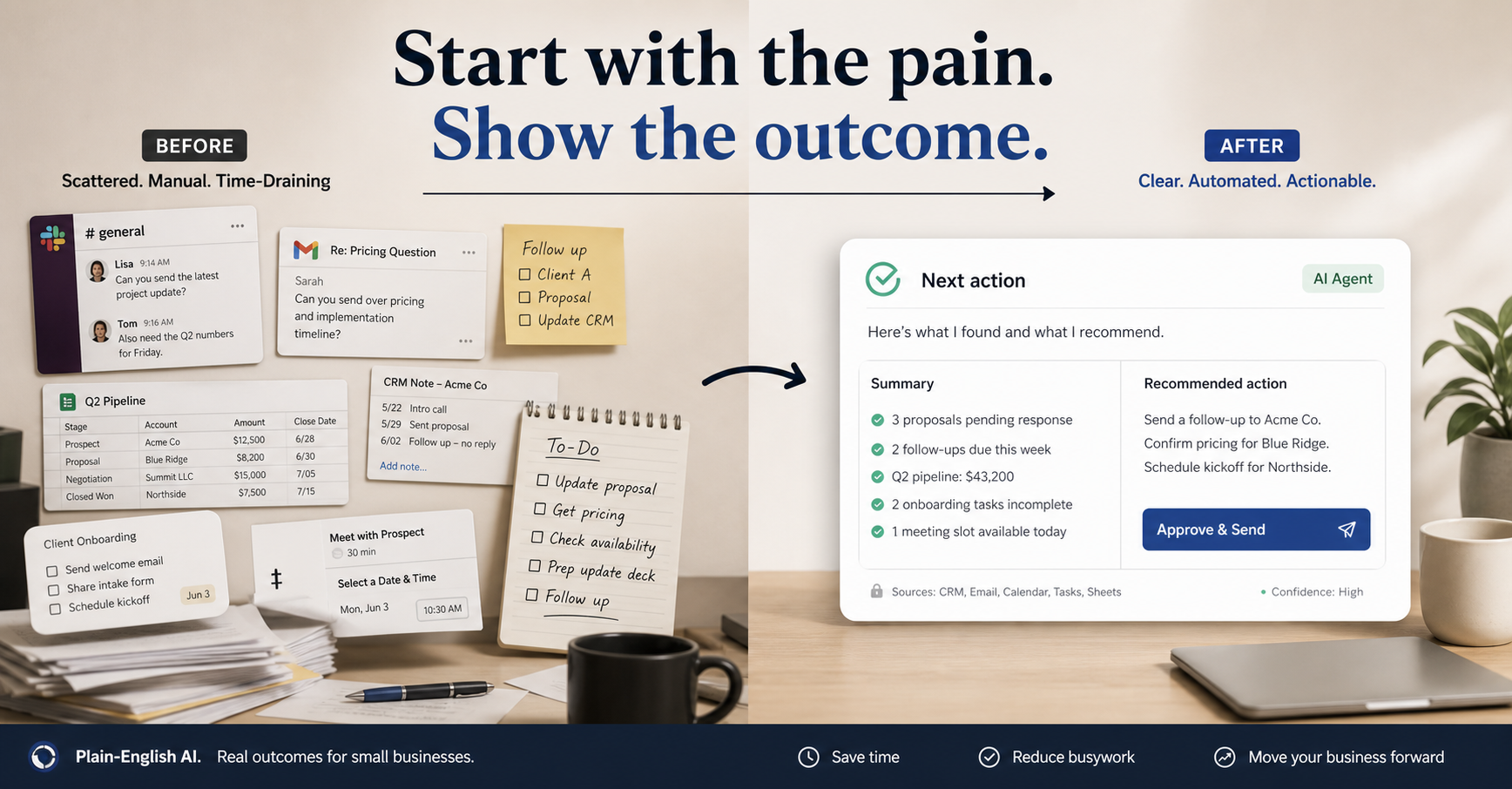
Many businesses have a dashboard that looked impressive on launch day and slowly became another forgotten tab. The information may still be correct. The problem is that someone has to remember to open it, understand it, and turn it into action while the rest of the day is moving quickly.
Availability is not usefulness
Putting information on a screen makes it available. It does not guarantee that the right person will see it in time. A lead can still go cold while its status sits accurately on a chart. A late job can remain red for a week without anyone knowing what to do next.
For information to be useful, it needs context. What changed? Why does it matter? Who should act? What is the sensible next step? Those answers are often more valuable than another visual summary.
Push the exception, not the entire database
Most employees do not need a complete view of everything. They need to know which few items deserve attention today. A short list of overdue follow-ups or jobs missing a required step is easier to act on than a screen full of totals.
That list can arrive by email, appear in the team’s normal messaging tool, or sit inside the system where the work already happens. The delivery method should match the habit, not create a new one.
Dashboards still have a place
A dashboard can be useful for exploring trends, comparing periods, and answering follow-up questions. It is especially helpful when someone has the time and responsibility to study the business at that level.
The mistake is treating the dashboard as the final step. If an issue needs action, the important signal should not depend on someone remembering to go look for it.
Begin with the decision
Before building another report, ask what decision it is supposed to improve. If the answer is ‘follow up with the right customers today,’ build for that moment. If the answer is ‘know whether jobs are slipping,’ show the exceptions and the people involved.
Starting with the decision keeps the solution small and the language clear. It turns information into a working part of the business instead of another place where information waits.